Getting started
Before you start configuring SalaX Secure Messaging, we recommend that you familiarize yourself with the following concepts.
Architecture behind SalaX Secure Messaging
-
What is Matrix concept?
Refer to the Elements of Matrix.
SalaX Secure Messaging deployment architecture diagram
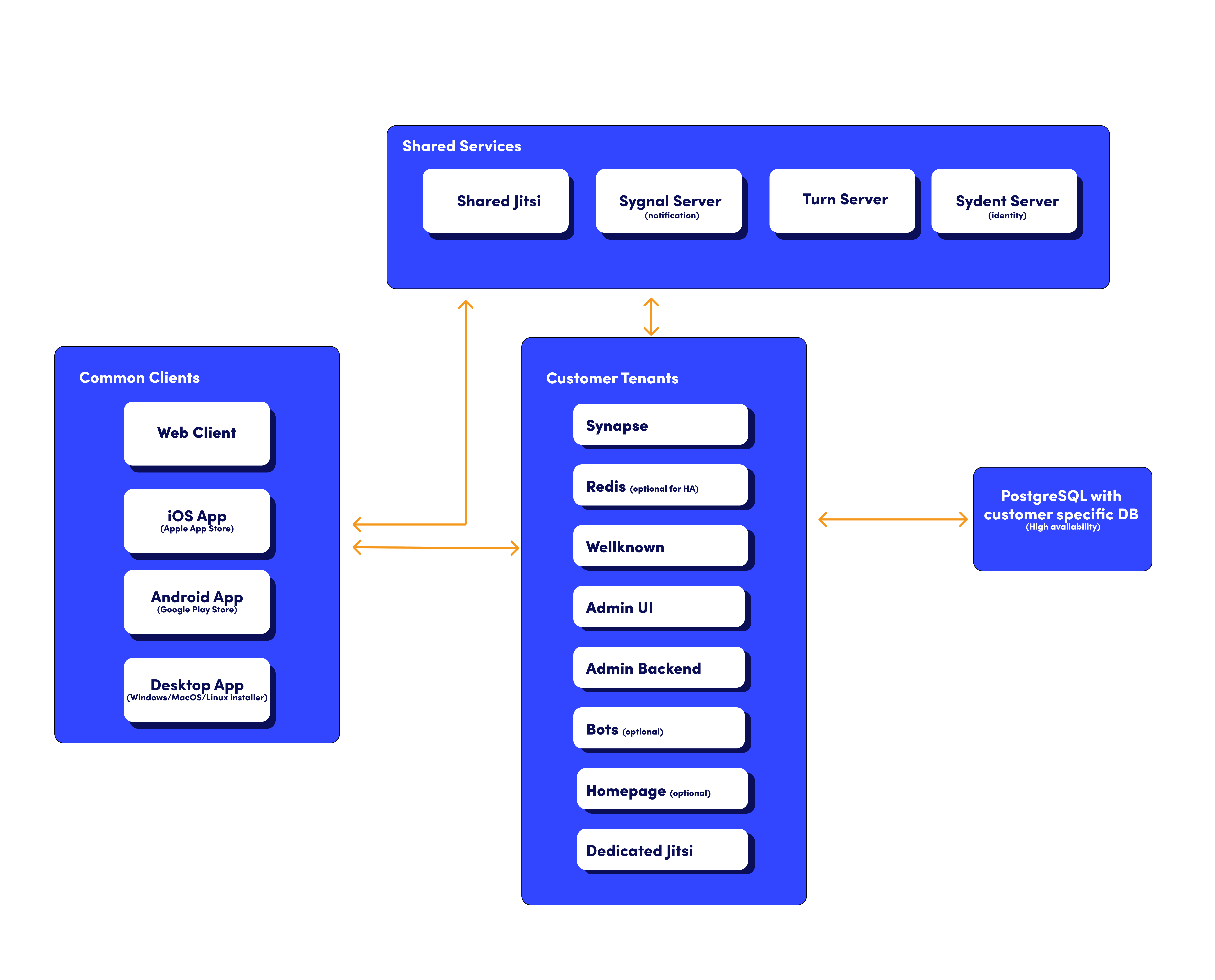
Platform Architecture
SalaX is containerised and orchestrated via Kubernetes, with a clean separation between the public-facing edge and internal service components. The Ingress controller is the single externally-reachable component — all client traffic enters through it over HTTPS, with no direct external access to any internal service.
SalaX also supports multi-node deployment.
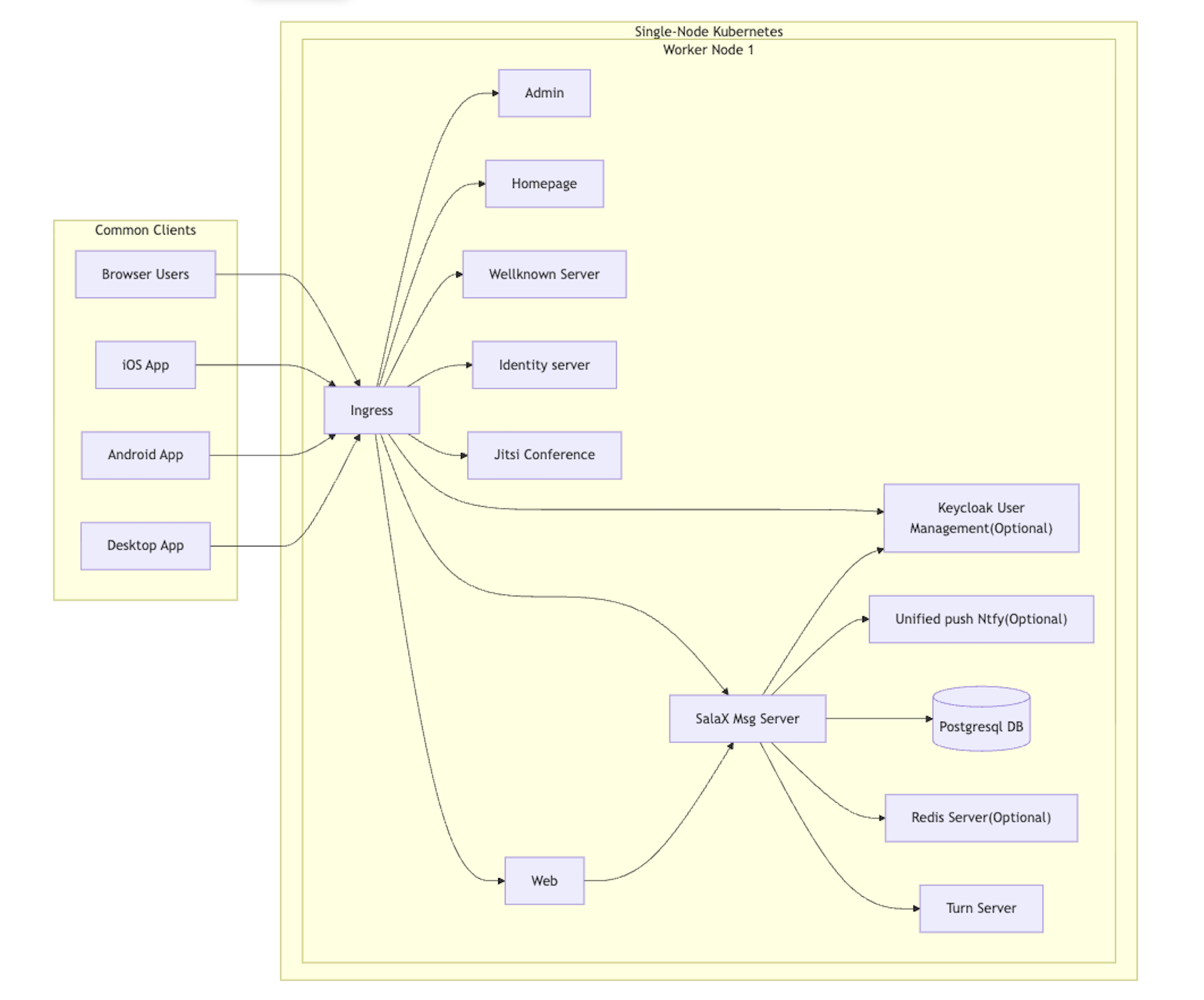
Figure 1 — SalaX Reference Architecture: Single-Node Kubernetes Deployment
Kubernetes Deployment and Availability
The SalaX Secure Messaging Installer can set up a single-node Kubernetes cluster and deploy the complete SalaX Secure Messaging product on it. In this deployment model, Kubernetes manages the application workloads and continuously works to keep the defined components running. Kubernetes helps ensure that the required Pods are restarted or recreated if they fail, while Kubernetes Services expose the required application components so they can communicate reliably within the cluster.
SalaX Secure Messaging is also designed to be deployed on an existing Kubernetes environment, including both single-node and multi-node clusters. When deployed on Kubernetes, the product benefits from Kubernetes workload management and self-healing capabilities. For example, if a Pod fails, Kubernetes can attempt to restart or recreate it, subject to the available cluster capacity and the way the cluster has been configured.
At present, SalaX Secure Messaging does not support customer-configurable horizontal Pod scaling. Customers should not increase the number of application Pod replicas manually unless this is explicitly supported by SalaX Secure Messaging documentation or guidance from SSH. The deployment should be operated with the Pod topology defined by the SalaX Secure Messaging Installer.
For production environments where improved infrastructure resilience is required, customers may deploy SalaX Secure Messaging on a properly configured Kubernetes cluster. Kubernetes can help reduce service interruption caused by Pod-level failures and, depending on the cluster setup, may help recover workloads affected by node-level issues. However, high availability and disaster recovery depend on the overall Kubernetes architecture, including node capacity, control plane availability, networking, persistent storage, backups, and recovery procedures.
Homeserver
-
How are homeservers and clients connected?
Refer to Homeserver.
End-to-end encryption
-
How does end-to-end encryption work?
Refer to the End-to-End Encryption implementation guide.